
Since 2020, we've been working together with the Joseph Rowntree Foundation and the Nationwide Foundation to shift the conversation about housing in the UK.
We’re seeing a new story taking hold and informing better discussion and debate about how to redesign our housing system. A story about homes as the foundation for a decent life, and a source of health, not wealth.
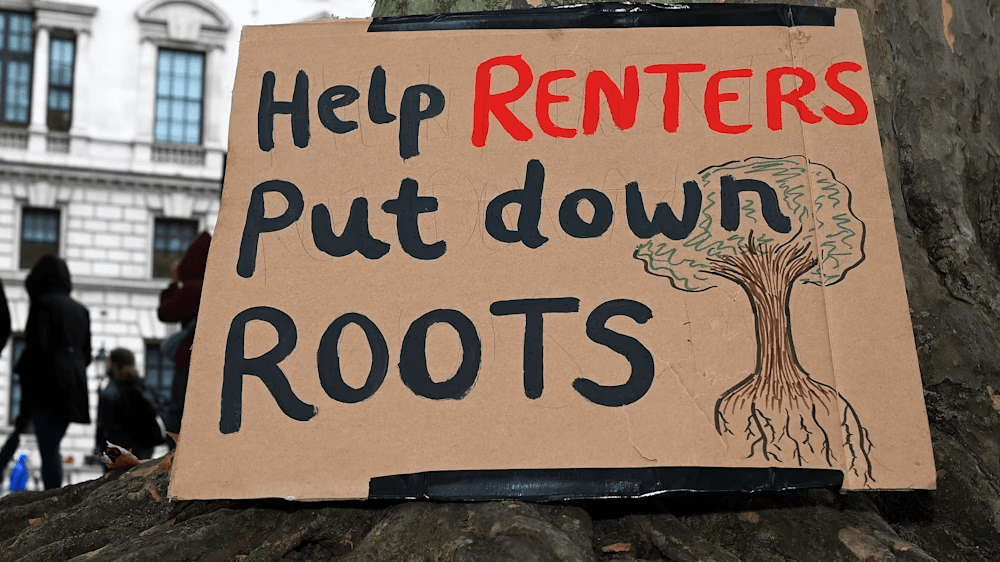
Brick by brick, the new story is making change happen
Through the tireless work of campaigners, we are already seeing positive progress on housing policies, which will mean many more people have a decent, affordable place to call home.
From the Renters’ Rights Act gaining royal assent, to Awaab’s Law mandating strict timeframes for social landlords to address serious hazards like damp, mould and emergency repairs. And a promised boost to the Affordable Homes Programme – an important step towards building more social homes.
We continue to work with JRF, the Nationwide Foundation, and partners across the housing sector to keep telling this new story, and adapting to new challenges.
Image: Shelter
Why we needed a new story
The Joseph Rowntree Foundation and the Nationwide Foundation approached us because they were both experiencing the same communications challenges. They felt that conversations with the public about the importance of decent and affordable homes had lost their way.
These conversations too often became about money, house prices and buying and selling. Messages about broader changes to our housing system which would help many more people live in a decent, affordable home weren’t landing. With others in the housing sector expressing the same challenge, the funders wanted to find a way to change the narrative.
What we found
People see buying a home as the ideal we should all be working towards. They also see homes as an investment, and a source of wealth.
As a result, people tend to see private renting and social homes as temporary, so the quality of these homes is not considered to be important. This obscures the need for policies to create more good social homes and reform private renting, for example.
While people do think about the negative impact of living in an unsuitable home, they don't tend to think about the positive impact of living in a decent one.
This means that people don't see what we have to gain from improving housing. We also found that while people recognise that our housing system is unequal, they are unclear about why this is the case and don't think this can be changed.
People recognise that we are experiencing a housing crisis. But they don't know how we can begin to solve it.
This leads to people feeling that the problem is too big, and too complex, to solve. So they tend to disengage entirely, or instead focus on how individuals might improve their own housing situation, by working harder or finding a better paid job.
What we did
We researched how to sidestep these unhelpful ways of thinking, and to instead build people’s understanding and tap into more productive mindsets. This informed a set of framing principles, which we developed into a practical toolkit, and an accompanying suite of resources focusing on specific topics such as social homes, renting and supported housing.
“…the best thing I’ve had from a partner, I think it’s because it’s just so user-friendly, and practical… it helps give me a grounding… I’ve not just learned 1000 different things that I’m trying to connect in my head, but instead have a framework through which they begin to make sense.” – Toolkit user
We also ran a series of open webinars for anyone communicating about homes, and more in-depth workshops with organisations such as Shelter, Crisis, the Chartered Institute of Housing and the National Housing Federation. We offered tailored support too – and consulted on framing key materials and campaigns such as Shelter’s Made in Social Housing.
Together we have been building up the framing skills and capability of the sector for over three years and can see many key voices embedding framing in their campaigns, policy asks and their strategies. Working alongside FrameWorks UK means we can provide high quality resources, as well as bespoke training to our growing community of framers.
The impact
1. Uniting the sector
By offering an evidence-based shared story for the sector to unite around, and opportunities to share peer-to-peer learning in workshops, we have helped to unite people working across the housing sector.
“I think the [network] and the [framing] toolkit and the combination of things available to the sector mean that [the sector is] probably more aligned than…it’s ever been…” – Communicator in the housing sector
This chorus of voices has been particularly apparent at key campaigning moments such as in the run up to the general election in 2024, and ahead of spending reviews and budgets. Different organisations have used consistent framing principles, while flexing communications to suit their voice and audiences.
So energising. I feel excited to bring these insights to my role. It was just a great session and I think the whole day would be useful for a lot of my colleagues.
2. A story about health, not wealth
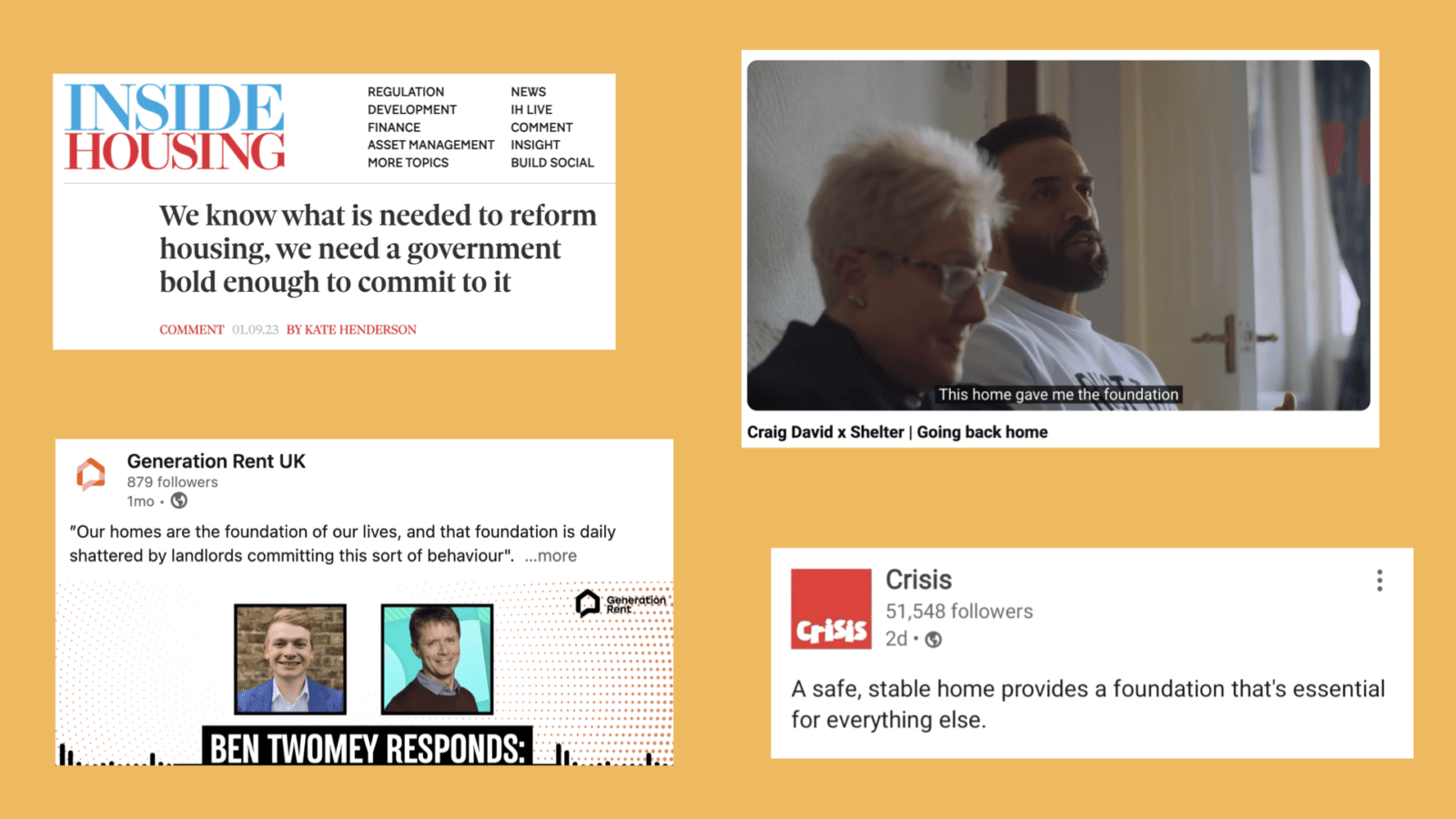
We’ve seen examples of the framing recommendations being used in the media, in housing strategies, campaigns and manifestos. It’s even been used by music icon Craig David.
In many of these cases we have consulted with partners to help frame their communications. But there are also plenty of examples where people have simply referred to materials such as the toolkit and run with it.
This consistent effort to reframe the story is shaping debate and creating the space and the will for change.
3. Shifting hearts and minds – and making change
The project’s learning partner DHA have gathered various testimonials from communicators who have put the framing principles into practice. We have heard many accounts of how individuals are seeing the impact in their day-to-day work.
“…the engagement, I’ve had more, since I think I frame it that way, it’s been like, wow, that was really powerful. And that…understanding [of] the whole thing in the round…”
Importantly, we have seen positive progress on housing policies too.
In autumn 2025 the Renters’ Rights Act gained royal assent, and Awaab’s Law was brought in. This mandates strict timeframes for social landlords to address serious hazards like damp, mould and emergency repairs. And a £39 billion boost to the Affordable Homes Programme has been announced – an important step towards building more social homes.
We continue to work with JRF, the Nationwide Foundation, and partners across the housing sector to keep telling this new story, and adapting to new challenges.
...the feedback has been really, really positive from [local politicians] ...that use of really, really relatable framing where people can connect with it, without necessarily knowing the evidence base or being bombarded with statistics or evidence, [means] they can just, at a human level, understand.