
There are many ways to assess if efforts to change a narrative are being successful and delivering real world change.
When it comes to evaluating success in changing the narrative around an issue, there are three phases of change that can be measured to assess if the new story is taking root and helping shifts to happen.
Phases of change
#1 Changing the story
Powerful stories get repeated. And stories need to be repeated over and over again to start to shift the narrative around an issue. It’s possible to track and monitor how well a story has been taken up by the field, the media and in political discourse.
#2 Changing the way people think
A new narrative is working when people start to think and feel differently about the issue. It’s possible to track the impact of campaigning efforts, shifting attitudes and growing support for policy change and – over time – mindset shifts.
#3 Changing policy and practice
Narrative change work is about changing the story, to help create change. It shapes, and sits alongside, our traditional campaigning and advocacy work. It’s possible to monitor and evaluate the progress, big and small, in shifting policy and practice.
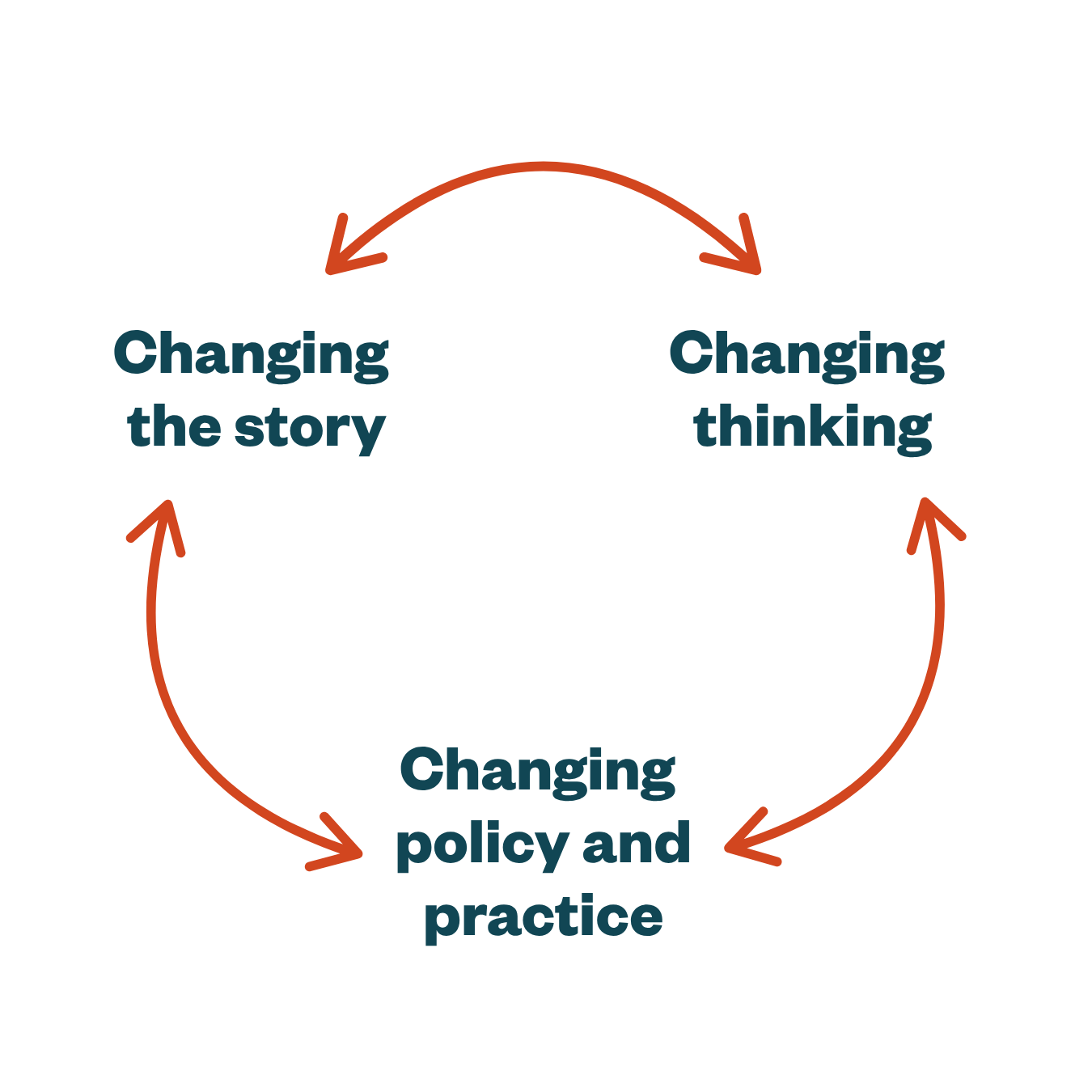
This process isn’t linear…
Sometimes a policy win comes before public thinking has shifted and can help to shape future thinking. But policy without public support is always at risk of being backtracked. Both are necessary to secure long-term lasting change.
There are a number of ways to evaluate each phase of change. It may not be necessary to evaluate each phase and the approach will depend on the outcomes being sought and, in particular, the level of ambition.
1. Changing the story
Evaluation methods
- Partner evaluation
- Field evaluation
- Media discourse evaluation
- Political discourse evaluation
- Cultural discourse evaluation
Narrative change can begin in many different ways. One way is when it is initiated by advocates working in a sector – homelessness campaigners changing how they make their case, lawyers standing up for the rule of law with a new frame, or public health professionals talking about the building blocks of health. So, one way to evaluate narrative change efforts is to understand if a sector has changed the story it’s telling.
The questions evaluations can address are: has the field been able to take up the new story? Have we seen a shift in the way the media report on the issue? Or in how it’s talked about on social media? Are political conversations changing?
2. Changing the way people think
Evaluation methods
- Campaign evaluation
- Attitude tracking
- Mindsets tracking
Changing the story is not an end in itself. It’s one way to shift the way people think about an issue – bringing one set of ideas to the fore and backgrounding others.
The questions evaluations can address range from assessing the effects of creative campaign execution on thinking through to long-term mindsets shifts.
3. Changing policy and practice
Evaluation methods
- Ripple evaluation
- Outcome evaluation
Effective narrative change lays the groundwork which enables real-world changes. A range of methods can be used to assess these effects on policy, practice and people’s lives. Given the range of factors that can contribute to changes in policy and practice, it can be difficult to isolate the effects of narrative change in creating impact, so identifying a pattern of correlation is frequently an appropriate expectation.

Narrative change: how do we know if it’s working?
Director of Impact, Maria Castellina, reflects on evaluating our work.
Read moreFind out more
